
What Size Generator Do I Need for My House?
Most homes require a 7,000–22,000 watt standby generator to run essential circuits during an outage. To size a generator correctly, add the running watts of every appliance you want to power, then add the highest starting (surge) watts among those appliances. Use the interactive calculator below for a precise, real-time estimate.
Interactive Whole House Generator Sizing Calculator
💡 Tip: Use the calculator below to select your appliances, adjust quantities, and instantly see your recommended generator size, peak wattage, and estimated fuel consumption. The tool accounts for motor surge loads, voltage type, and a 20% safety buffer.
Whole House Generator Sizing
Select your appliances below to calculate the exact generator size you need to keep your home running during a power outage.
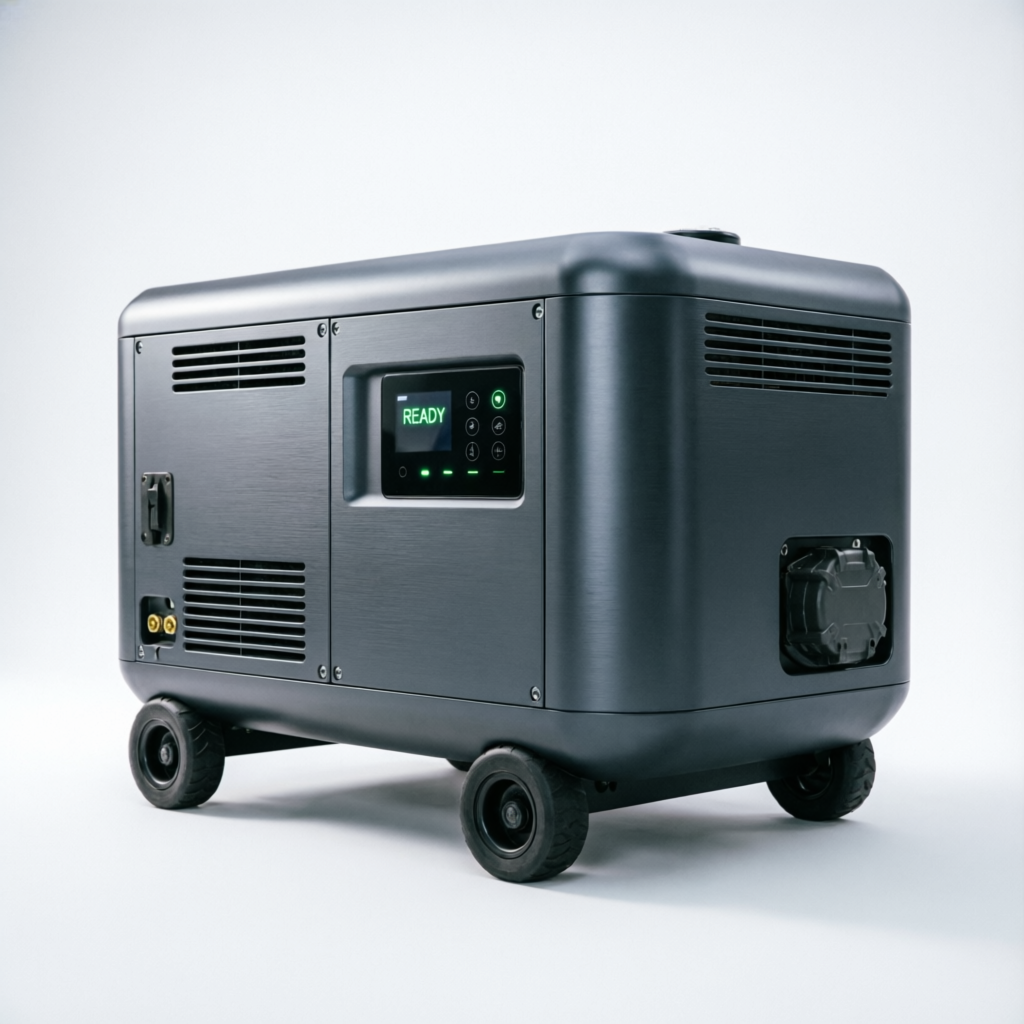
How to Size a Whole House Generator in 3 Steps
Sizing a backup generator follows a straightforward electrical formula. Here’s how professionals calculate it:
Step 1: List Your Essential & Backup Appliances
Decide what you want to power during an outage. Common categories include:
- Life-safety & comfort: Sump pump, well pump, furnace fan, refrigerator, medical equipment
- Convenience: Lights, microwave, TV, router/modem, garage door opener
- High-draw HVAC: Central AC, heat pump, electric water heater
Step 2: Add Running Watts + Highest Starting Watts
Every electrical device draws two types of power:
- Running Watts: Continuous power needed to keep the device operating
- Starting (Surge) Watts: Temporary power spike (usually 2–3x running watts) required to start motors or compressors
Formula: Total Generator Size = (Sum of all running watts) + (Highest starting watt difference)
Step 3: Apply a 20% Safety Buffer
Generators shouldn’t run at 100% capacity for extended periods. Adding a 10–20% buffer improves longevity, reduces noise, and prevents voltage drops when multiple appliances cycle on.
Running Watts vs. Starting Watts: Why It Matters
This is where most DIYers miscalculate. Inductive loads (motors, compressors, pumps) require a massive burst of energy to overcome inertia and magnetic resistance.
| Appliance | Running Watts | Starting Watts | Why the Spike? |
|---|---|---|---|
| Refrigerator | 700W | 2,200W | Compressor motor startup |
| Well Pump (½ HP) | 1,000W | 2,100W | Water pressure resistance |
| Central AC (3 Ton) | 6,000W | 12,000W | Fan + compressor dual surge |
| Microwave | 1,000W | 1,000W | Resistive load (no motor) |
Pro Tip: If your calculator shows a starting watt requirement of 10,000W but only 4,500W running, you need a generator rated for at least 10,000 peak / 7,500 running watts. Ignoring surge capacity is the #1 cause of generator overload trips.
Common Household Generator Sizing Chart
Use this reference table to estimate your needs before using the calculator:
| Home Size | Typical Generator Range | What It Powers |
|---|---|---|
| Small Apt/Condo | 3,000–5,000W | Fridge, lights, router, TV, fan |
| 1–2 Bed House | 5,000–8,500W | Above + sump pump, well pump, microwave |
| 3–4 Bed House | 10,000–17,500W | Above + central AC (2–3 ton), furnace, dryer |
| 5+ Bed / Luxury | 20,000–48,000W | Full-home backup, pool pump, EV charger, dual AC |
How Voltage, Phase & Fuel Type Affect Your Choice
120V vs. 240V Split-Phase
Most residential generators output 120/240V split-phase. 240V is required for:
- Central AC condensers
- Electric dryers & ranges
- Electric water heaters & well pumps
- EV chargers
If you only run 120V appliances, you can safely use a smaller inverter generator. For whole-house coverage, ensure your unit has a 240V outlet and matches your home’s electrical panel configuration.
Portable vs. Standby vs. Inverter
- Portable: Budget-friendly, manual start, lower continuous output (3,000–10,000W)
- Inverter: Clean power for electronics, quiet, fuel-efficient, parallel-capable (2,000–8,000W)
- Standby (Whole-Home): Automatic transfer switch, 24/7 monitoring, 7–48kW output, professional installation required
Fuel Consumption Reality Check
A 10kW generator consumes roughly 1.5–2.5 gallons per hour at 50% load. At 100% load, consumption can jump to 3+ gal/hr. Natural gas models run slightly less efficiently but offer unlimited fuel if your utility stays active. Always size fuel storage accordingly.
Pro Tips to Avoid Overloading Your Generator
- Never exceed 80% continuous load for portable units; standby generators can handle 100% but run cooler at 70–75%.
- Install a Hard Start Kit on central AC units if using a generator under 12kW. This cuts starting surge by up to 50%.
- Use a Manual Transfer Switch or interlock kit. Backfeeding through a wall outlet is illegal and deadly.
- Stagger high-draw appliances. Run the AC, then the dryer, then the well pump. Never turn them on simultaneously.
- Label your panel circuits. A licensed electrician can map which breakers power essential vs. luxury loads, streamlining your sizing process.
Frequently Asked Questions (FAQ)
What size generator do I need to run my entire house?
A typical 1,500–2,500 sq. ft. home requires a 15,000–22,000W standby generator to run central AC, refrigerator, well pump, furnace, lights, and electronics simultaneously. Homes under 1,000 sq. ft. usually need 7,000–10,000W.
Can I run my AC on a generator?
Yes, but central AC draws massive starting watts. A 3-ton AC needs ~12,000W surge. Pair it with a hard start kit and ensure your generator’s peak rating exceeds the AC’s starting requirement by at least 15%.
How do I calculate starting watts for my appliances?
Check the appliance nameplate or manual. If only running watts (or amps/volts) are listed, multiply running watts by 2.5–3 for motor-driven devices (pumps, compressors, drills). Resistive loads (lights, heaters, microwaves) have equal running and starting watts.
Is it better to oversize a generator?
Moderate oversizing (10–20% buffer) is recommended. Extreme oversizing wastes fuel, increases installation costs, and can cause “wet stacking” in diesel generators. Right-sizing ensures optimal efficiency and engine longevity.
How long can a generator run continuously?
Portable gasoline generators typically run 8–12 hours on a full tank. Standby generators can run 24/7 if connected to natural gas or propane, but require maintenance checks every 100–200 operating hours.
Ready to Find Your Exact Generator Size?
Don’t guess with your home’s electrical safety. Use the interactive generator sizing calculator above to get a precise wattage recommendation, fuel consumption estimate, and tailored appliance breakdown. For installations over 10kW, always consult a licensed electrician and verify local building codes.
🔌 Need help interpreting your results? Download our free Generator Sizing Checklist or contact a certified backup power specialist.
Also see: Energy Converters