
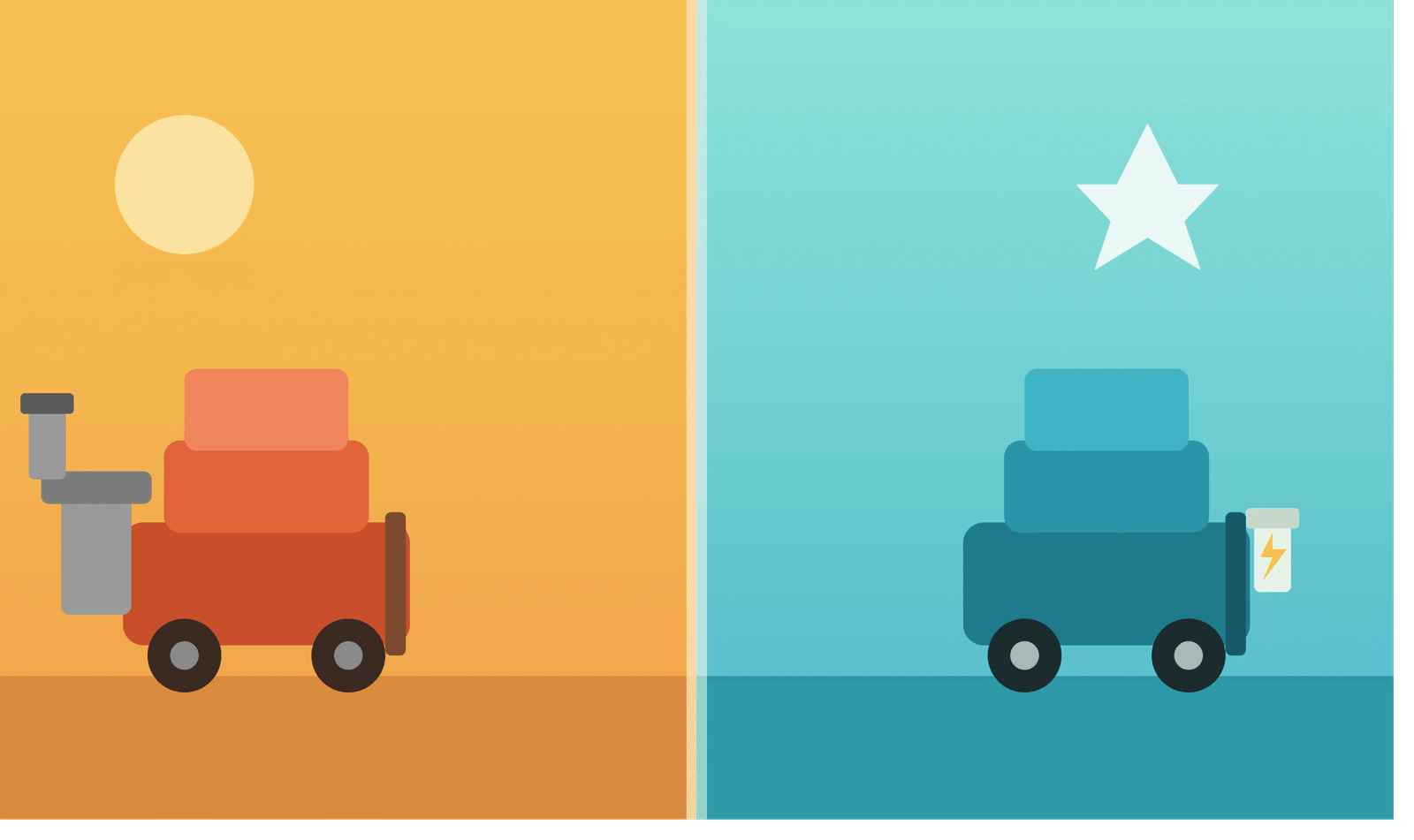
Electric golf carts cost less to run, need less maintenance, and are quieter — making them the better choice for most golf course and neighborhood use. Gas golf carts cost more upfront in fuel and upkeep but deliver more power, longer range without recharging, and better performance on hills or rough terrain. Your best pick depends on your terrain, how far you drive daily, and whether you have a place to charge.
Below, we break down the real-world differences so you can decide with confidence — not guesswork.
Gas vs. Electric Golf Carts
| Factor | Gas Golf Carts | Electric Golf Carts |
|---|---|---|
| Upfront cost | Usually lower | Usually higher |
| Fuel/energy cost | Higher (gasoline) | Lower (electricity) |
| Maintenance | More frequent, more parts | Minimal, fewer moving parts |
| Noise level | Louder | Nearly silent |
| Range | Long, refuel in minutes | Shorter, needs charging time |
| Power on hills | Stronger, consistent torque | Good, but drains battery faster |
| Environmental impact | Emits exhaust | Zero emissions while running |
| Best for | Hilly terrain, heavy daily use, hauling | Flat courses, short trips, quiet neighborhoods |
Pros of Gas Golf Carts
1. Longer Range Without Waiting
Gas carts can run all day on a single tank and refuel in under five minutes. This makes them ideal for large properties, farms, or commercial use where downtime isn’t an option.
2. Better Performance on Hills and Rough Terrain
Gas engines deliver consistent torque regardless of battery charge level. If you’re driving on hilly courses, gravel paths, or hauling heavy loads, gas carts typically outperform electric models.
3. Lower Upfront Purchase Price
In many cases, a comparable gas golf cart costs less to buy than an electric one. This makes gas carts attractive for buyers on a tighter initial budget.
4. No Dependence on Charging Infrastructure
You don’t need an outlet or charging station nearby. This is a major advantage for remote properties, hunting land, or job sites without reliable electricity access.
Cons of Gas Golf Carts
1. Higher Long-Term Operating Costs
Gasoline prices fluctuate and add up over time, especially with frequent use. Electric carts almost always cost less per mile to operate.
2. More Maintenance
Gas engines require oil changes, spark plug replacements, air filter changes, and more frequent tune-ups. This means more time and money spent on upkeep compared to electric models.
3. Louder and Smellier
Gas carts produce engine noise and exhaust fumes, which can be disruptive on quiet courses or in residential neighborhoods. Many gated communities and golf courses now restrict or ban gas carts for this reason.
4. Higher Emissions
Gas engines burn fossil fuels and release exhaust, which isn’t ideal for environmentally conscious buyers or eco-restricted communities.
Pros of Electric Golf Carts
1. Lower Operating Costs
Charging a battery costs significantly less than buying gasoline. Over several years of ownership, electric carts typically save owners hundreds of dollars in fuel costs alone.
2. Minimal Maintenance
Electric motors have far fewer moving parts than gas engines. No oil changes, no spark plugs, no exhaust system — just occasional battery checks and tire care.
3. Quiet and Emission-Free
Electric carts run almost silently and produce zero emissions during operation. This makes them the preferred choice for neighborhoods, resorts, and eco-conscious golf courses.
4. Smoother, Simpler Driving Experience
Electric carts accelerate smoothly without engine vibration or noise. Many owners find them more relaxing and pleasant to drive for everyday errands.
Cons of Electric Golf Carts
1. Limited Range Per Charge
Most electric golf carts run 30–40 miles on a full charge, depending on battery type and terrain. Heavy use or hilly terrain can drain the battery faster than expected.
2. Charging Time
Recharging typically takes 6–8 hours, meaning you need to plan ahead if you’re using the cart heavily throughout the day. This isn’t ideal for commercial or all-day use without backup power.
3. Higher Upfront Cost
Electric carts, especially those with lithium-ion batteries, often carry a higher initial price tag. However, this is frequently offset by lower long-term running costs.
4. Battery Replacement Costs
Batteries degrade over time and need replacement every few years. Lithium-ion batteries last longer than lead-acid but cost more to replace when the time comes.
Gas vs. Electric Golf Carts: Which Should You Choose?
Choose a gas golf cart if:
- You drive long distances daily without access to charging
- You need to haul heavy loads or climb steep hills regularly
- You use the cart for commercial or agricultural work
- Refueling speed matters more than running cost
Choose an electric golf cart if:
- You drive on flat or moderately hilly terrain
- You want lower long-term costs and less maintenance
- Noise and emissions are a concern in your community
- You have consistent access to a charging outlet overnight
👉 Check out this detailed guide on electric to gas golf cart conversion to learn about costs, process, and pros/cons.
Frequently Asked Questions
Are electric golf carts cheaper to own than gas carts?
Yes, over time. Electric carts cost less to charge than gas carts cost to fuel, and they require far less maintenance, which usually makes them cheaper to own long-term despite a higher upfront price.
Do gas golf carts last longer than electric ones?
Gas cart engines can last many years with proper maintenance, but electric motors also have long lifespans and fewer parts that wear out. The battery, not the motor, is usually the first major replacement on an electric cart.
Which golf cart is better for hills?
Gas golf carts generally handle hills better because engine torque doesn’t fluctuate with charge level. Electric carts can manage moderate hills but may drain the battery faster on steep or repeated inclines.
Are electric golf carts allowed everywhere gas carts are?
Not always — it’s the opposite in many cases. Many gated communities, resorts, and golf courses restrict gas carts due to noise and emissions, while electric carts are widely accepted.
How far can an electric golf cart go on one charge?
Most electric golf carts travel 30–40 miles per charge, though this varies based on battery type, terrain, and cart weight. Lithium-ion batteries generally offer better range than older lead-acid batteries.
Conclusion
There’s no universal “better” option between gas and electric golf carts — only the better option for your specific needs. If low running costs, quiet operation, and minimal upkeep matter most, electric wins. If you need long range, strong hill performance, and quick refueling, gas is the more practical choice.